What a Miyawaki forest is, how it grows, and why living beside one makes a difference in Lake Botanica’s villa plot community in North Bangalore.
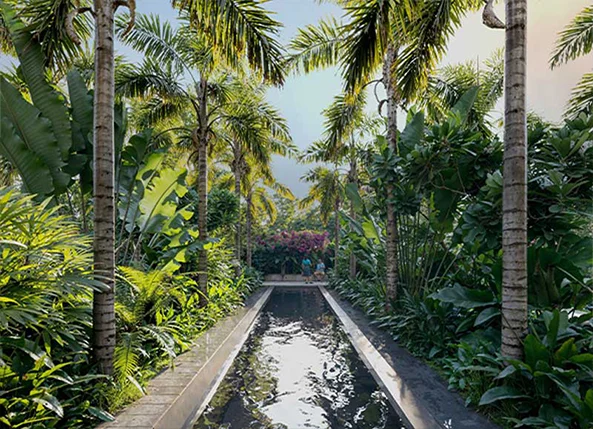
Imagine opening your front door onto a young forest: dense, layered, alive with birdsong, and planted only a few years ago. That is the promise of the Miyawaki method, a Japanese approach to native woodland that is changing what a residential community can feel like. Here is how it works, and why it matters for the way you live.
A botanist’s idea
The method takes its name from Akira Miyawaki, a Japanese botanist who spent decades studying the natural vegetation of Japan. He observed that the trees which truly belonged to a place, the species that would grow there without human help, were often missing from planted landscapes. His answer was to rebuild native forest deliberately: study the local ecology, choose the right mix of native species, and plant them closely together on well-prepared soil.
Miyawaki and his teams went on to plant millions of trees across Japan and beyond. Since then, the technique has been adopted around the world, including in Indian cities, as a way to create pockets of native woodland in limited space.
How a Miyawaki forest grows
The principles are simple, even if the practice takes care.
- Native species only. Trees and shrubs are chosen from the plants that naturally belong to the region, so they are suited to its soil, rainfall and wildlife.
- Many layers. Canopy trees, sub-canopy trees, shrubs and ground cover are planted together, recreating the structure of a natural forest.
- Dense planting. Saplings are placed close together, typically several per square metre. They compete for light and grow upward quickly.
- Prepared soil. The ground is enriched with organic matter and mulched to hold moisture and feed soil life.
- A few years of care. Watering and weeding are needed in the early years; after that, the forest is designed to sustain itself.
The result is a forest that grows considerably faster and denser than conventional planting, with the character of natural woodland rather than an ornamental garden.
A garden is maintained. A forest, given time, maintains itself.
Why it matters to the way you live
Shade and cooler air
Dense, layered canopy shades the ground and cools the air through transpiration. In a city where summers are growing warmer, a forest at the edge of your home is a natural form of climate control.
Cleaner air and quieter days
Leaves trap dust, and layered vegetation softens noise. A Miyawaki belt is, among other things, a living screen between a home and the world beyond it.
Birds, butterflies and life
Native plants support native insects, which in turn bring birds. Within a few seasons, a young forest becomes a habitat, and a morning walk becomes something to look forward to.
Water held in the ground
Mulched, root-rich forest soil absorbs rain rather than shedding it. Combined with rainwater harvesting, it helps recharge groundwater, a quiet but important benefit in Bengaluru.
Wellbeing
Time spent among trees is widely associated with lower stress and better mood. A forest you can step into from your own front door turns that from an occasional outing into daily life.
A Miyawaki forest in a villa plot layout
- More than 5,000 native trees planted in Miyawaki-style forests
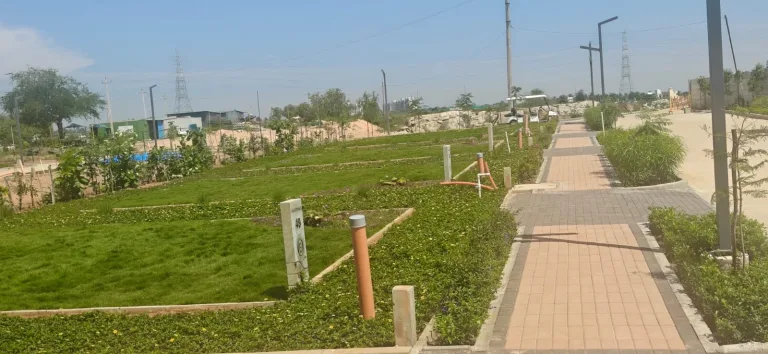
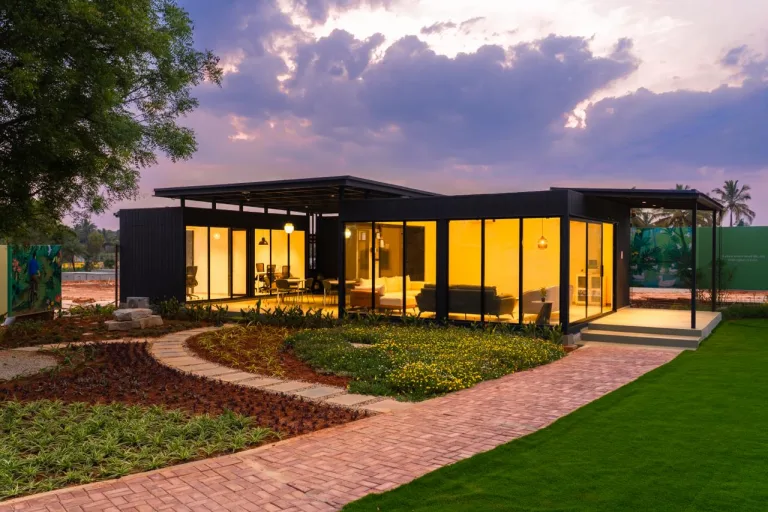
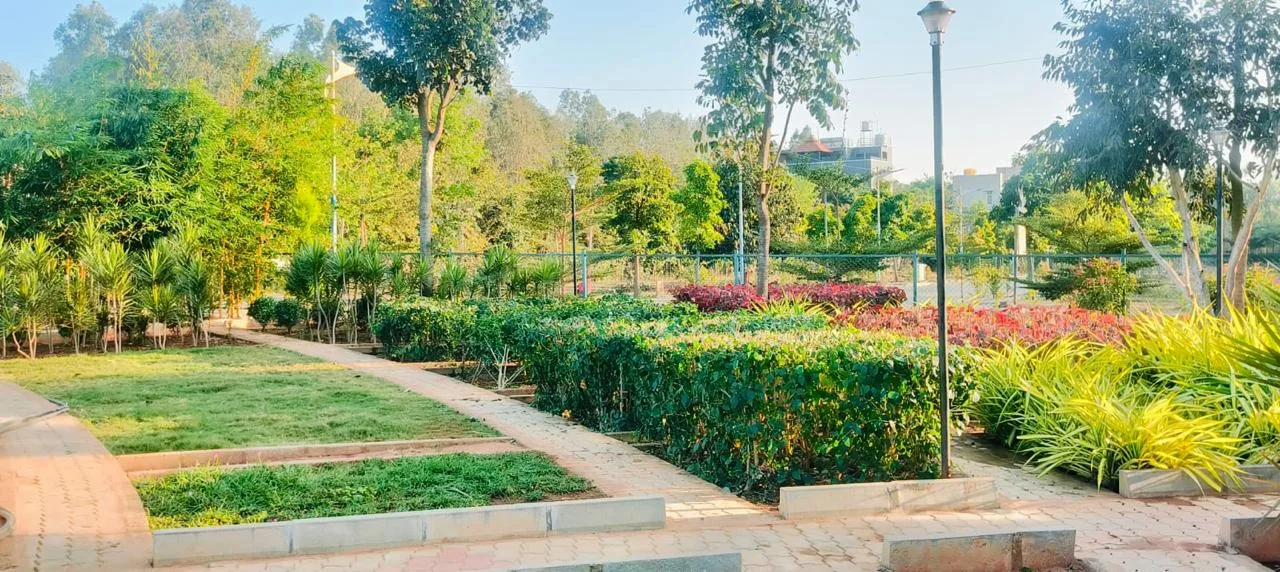
- Every one of the 261 villa plots opens onto forest
- 51% of the land kept as green and open space
- Pesticide-free gardens and site-wide rainwater harvesting
A morning in a villa plot community
The day begins early here. Light comes through young canopy in the forest beside your plot, and the first sound is birds rather than traffic. A walk takes you along shaded paths to the granite quarry lake, still and silver at this hour. By the time you reach the Club Commune for a swim or a coffee at the library café, the forest has done what forests do: slowed the pace, cleared the mind, and made the day feel larger.
This is the idea behind Lake Botanica by Earthenhues Estates: a community where nature is not a feature on a brochure but the setting of everyday life, in North Bangalore, twenty minutes from the airport. Read more about why we give 51% of the land to green space.
Walk the forest yourself
The best way to understand a Miyawaki forest is to stand in one. Site visits run Monday to Saturday, from 9 am to 6 pm, and we would be glad to show you the plots, the lake and the forest that grows between them.
Questions about Miyawaki forests
What is a Miyawaki forest?
Do trees and green cover increase property value?
How fast does a Miyawaki forest grow?